Namibia Sets a New e-Government Strategic Roadmap to Support the Vision "Digital First Services for All

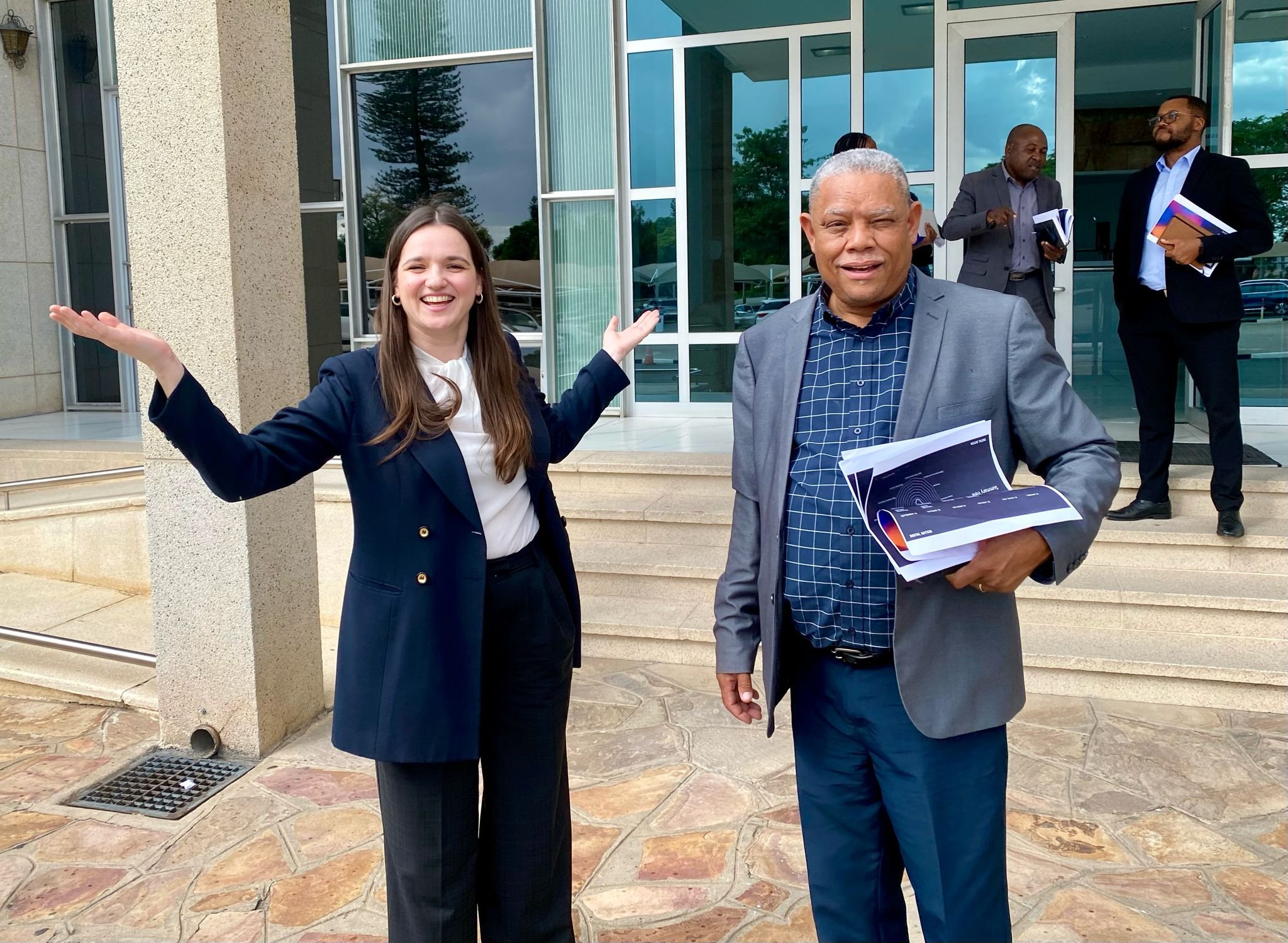
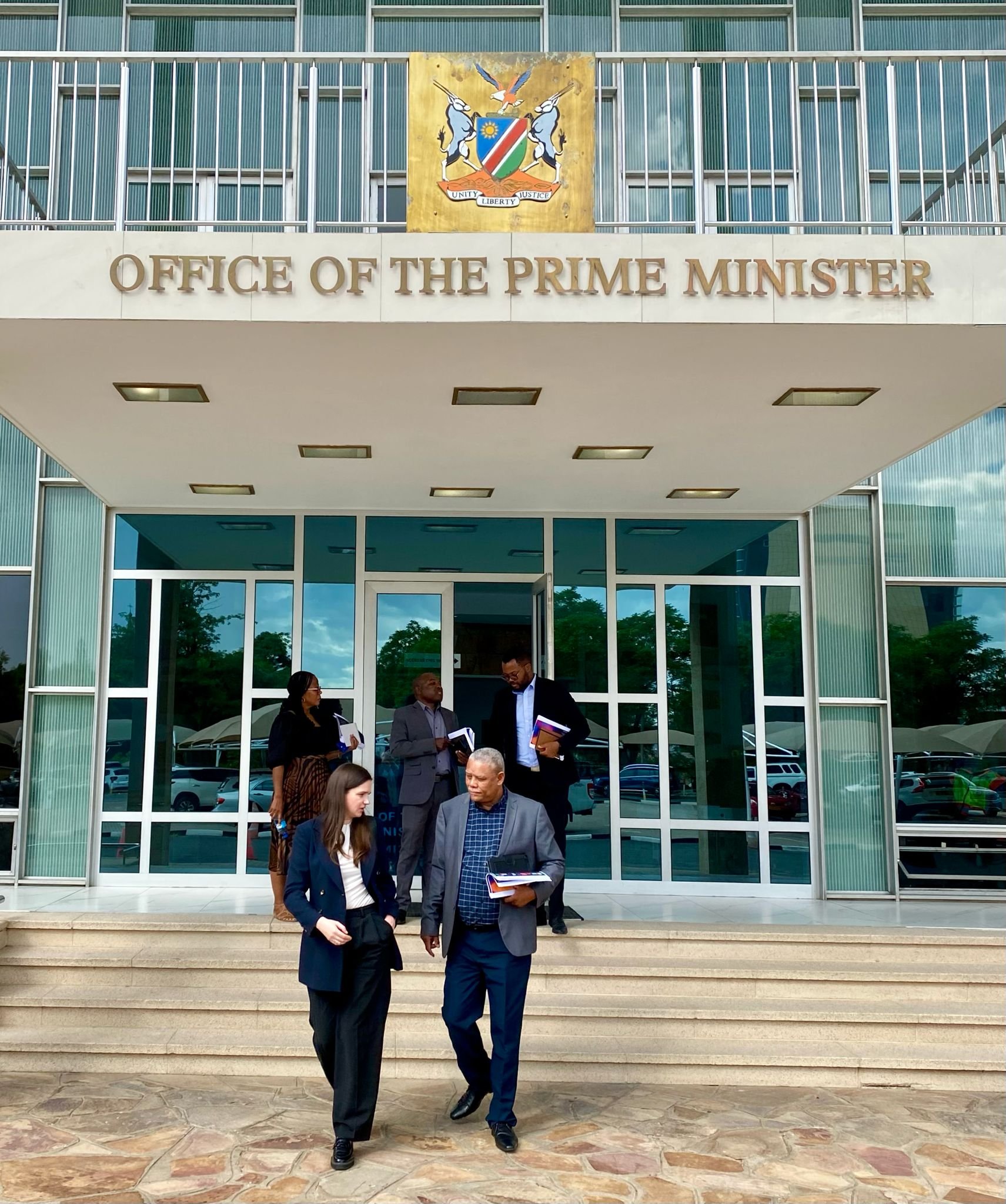
In February 2024, the Digital Nation team successfully completed the project to draft the new Digital Government Strategic Roadmap for Namibia for 2024-2026.

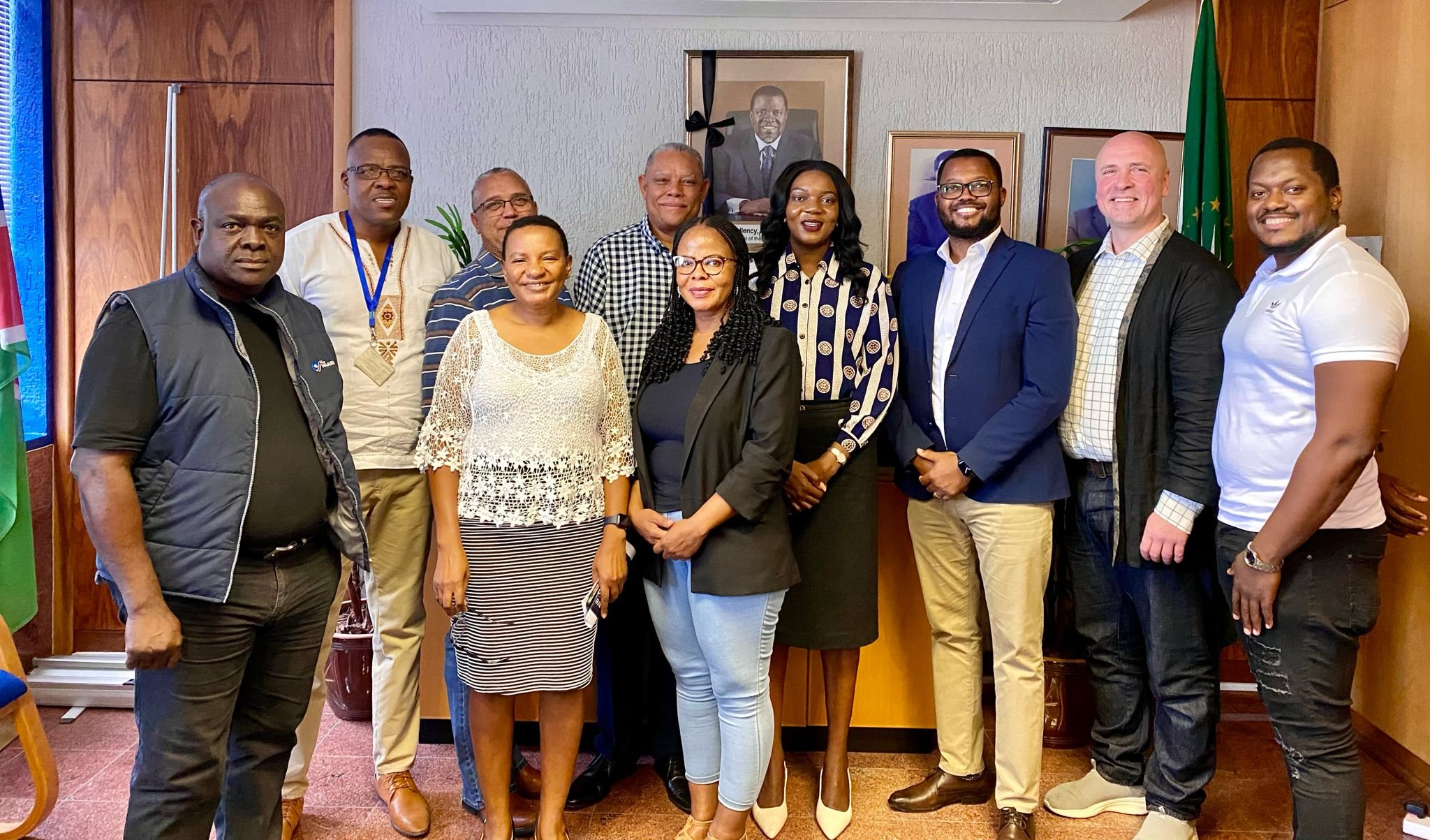
This roadmap was developed in collaboration with the Office of the Prime Minister of Namibia. Launched in September 2023, the project encompassed several phases, including the mapping of the Namibian government's digital readiness based on Digital Nation's Digital Governance Future-Readiness Framework, the identification of needs and opportunities, development of the roadmap’s vision and actions. To achieve this, both extensive desk research and three co-creation workshops were conducted, engaging stakeholders from various government organisations, the private sector, and other partners.

The roadmap sets the vision of "Digital First Services for All" and prioritises inclusivity, citizen-centricity, security, and innovation, with the objective of making digital services universally accessible and responsive to all users' needs. By 2026, the roadmap aims to achieve key milestones such as transforming the top 10 priority public services, eliminating unnecessary paperwork in 50 services through NamX integrations, and issuing eIDs to at least 25% of the population.

To realise this vision, the roadmap outlines six strategic pillars: Governance and Leadership; Digital Identity; Registers and Interoperability; Digital Public Services and Administration; Cybersecurity and Data Protection; and Government Infrastructure and Platforms. These pillars cover a comprehensive range of initiatives, including the establishment of a foundational eID infrastructure, the expansion of NamX integrations, the enhancement of digital services user-centricity, and the development of a national data centre. Each pillar is accompanied with concrete timelines and distribution of roles and responsibilities for the next three years.

The project was supported by the Estonian Centre for International Development (ESTDEV). 

AUDA AI White Paper

The African Union Development Agency (AUDA-NEPAD) has published a White Paper on Regulation and Responsible Adoption of AI in Africa. The White Paper sets out to demystify AI by providing the reader many already existing examples of AI uses in Africa and gives African governments recommendations on what their next steps should be.

The document is written very favorably towards AI, seeing the technology as a saving grace for major problems affecting African countries such as climate change, providing medical care to everyone and empowering local languages, e.g. making it possible to teach students in their own local languages instead of colonial world languages that to many are foreign.

From an Estonian standpoint the issue around languages hits close to home. With only around a million native speakers, Estonian is not a priority for any major tech giant. For example, iPhones are the most popular phones in Estonia, but iOS is not available in Estonian. That sounds like a real first world problem (which it is), but when we started developing Bürokratt, the first national chatbot that needed to communicate in the state’s official language it became obvious that the government needed to heavily invest in this field, starting from collecting language data and creating various language corpora.

So, it is good to see language (technology) being prioritized in the White Paper. To all (African) government officials, investing in language technology will ensure that your culture and language will remain in existence for centuries (read a long period of time, cannot give any specific time frame) and will benefit not only the educational sector, but improve almost every other sector as well.

W.r.t climate change, many listed exciting use cases that fight the problems caused by climate change were important additions to the White Paper, however, the negative aspects were left out completely. Firstly, AI will need a lot of energy which sadly will most likely mean bad things for the climate. Also, as AI can be used for good (see all the exciting use cases) it can be used for bad as well: massive misinformation campaigns amplified by AI should be expected and dealt with accordingly by every government on the continent.

The recommendations in whole were very reasonable when considered that this White Paper is meant for the whole continent of Africa. Every African government will need to consider their country’s starting point and then every recommendation on its own. This is echoed in the paper’s first recommendation of creating “national AI strategies that can clearly define the national AI priorities across all economic sectors and strengthen competitive advantage of each country.”

Additionally, and not surprisingly, all (African) governments need to consider the monetary means, because in no way are any of the suggestions cheap. Creating a strategy will alleviate this a bit, because with a strategy governments will commit their resources to certain activities, and it is more (cost)effective to finance certain activities that have already been prioritized than give funds to spontaneous projects that may not contribute to the whole as much as expected.

You can look further into AUDA’s White Paper here:
https://www.nepad.org/blog/taking-continental-leap-towards-technologically-empowered-africa-auda-nepad-ai-dialogue

Digital Nation 2nd Year of Action

Year of Going Global - in our 2nd year of action our footprints can be found in 14 countries on 4 continents.

This has been possible thanks to the best Digital Nation core team & our constantly growing network of experts, who contributed in 26 advisory works in 2023 to build future-ready digital societies around the world!

We expanded our core team with 3 world-class experts in their respective fields, Helena Lepp as a Director of Service Transformation, Kristo Vaher as a Director of Technology and Sigrit Siht as a Director of AI & Data.

Here are the some of the highlights from this horizon expanding year:

We continued helping governments build roadmaps for digital change. For example, in Namibia partnering with the Office of the Prime Minister and the Estonian Centre for International Development (ESTDEV) funds and contributed to the Kingdom of Saudi Arabia’s 2030 digital government strategy.

We looked into the future of government customer experience trends together with The International Foundation for Customer Experience in Government, and supported the Abu Dhabi government on their next Government Customer Experience (#GCX) strategy.

We helped governments plan for and deliver data exchange and interoperability, from high-level awareness training in Kenya to delivery assurance in Trinidad & Tobago to mentoring the a2i team in Bangladesh.

We created the Smart Africa Trust Alliance (SATA) initiative’s strategy for cross-border digital trade and digital single market across Africa, plus delivered a practical resource mobilisation plan to make #SATA a reality.

Meanwhile in Kenya, Digital Nation and #ESTDEV have been hard at work training and piloting support for bringing citizen-centric service design principles into the heart of government operations.

In Azerbaijan, we launched a comprehensive two-month digital leadership development programme, tailored for 60 public sector leaders, based on our Digital Leader's Competence Model. We taught that the essence of digital transformation lies in effective management rather than solely technological upgrades.

Our focus for our third year in action will be two-fold. First, we will expand in our current core expertise areas - digital government roadmaps, strategy development and advice during the delivery of transformation initiatives, data exchange and interoperability implementation. We will also continue committing to public sector leadership development programmes, as digital transformation is always a leader’s job!

In addition, we are working to launch whole new advisory streams on public sector AI, nextgen digital services and related reforms, and startup ecosystem building. Let us know if these topics are on your plate and mind for 2024 and let’s pilot them together.

Interoperability unpacked by Kristo Vaher & Siim Sikkut

Yesterday Siim Sikkut and Kristo Vaher shared insights into creating an interoperable digital government to an international audience of policy leaders and experts at the latest round of Digital Nation’s webinar series on how to become a digital nation.

Kristo Vaher, Estonia’s former CTO divided the key to success in interoperability into 3 main categories:
🧩 Decentralised Architecture
🌐 Cross-Border Readiness
📑 Open Source Standards

If you missed the session here are 9 key takeaways that Kristo Vaher, Estonia’s former CTO and Digital Nation’s Technical Director presented for you to get started on your path in creating interoperable digital public services:

1. By integrating decentralised architecture you gain the ability to migrate technology.
2. A byproduct of decentralising your systems is creating cybersecurity which is fault tolerant.
3. Even if you decentralise your systems in play, you can still maintain central governance of your product stack.
4. Designing your systems with cross-border compatibility from the get-go enables you to be prepared at no extra cost, whilst preparing you for the future.
5. In an international world, shared languages enable shared business opportunities to prosper if the architecture surrounding the businesses ecosystem allow it by being interoperable.
6. When starting out, you don’t have to reinvent the wheel. Examples like GovStack, X-Road and federated data exchange are options for getting off the ground.
7. By procuring your systems using open source standards you may gain the right to IP.
8. Even if you can’t procure the services open source, you can still implement adapters to enable interoperability.
9. The lessons you learned can and will help someone else along the way, with any chance yourself in the future, so share and publish the fruits of your labour along with metrics.

“Interoperability isn’t a tech challenge: it requires policies and legal rules, careful change management, stakeholder engagement and governance, etc. That is why a good comprehensive interoperability roadmap is required, which also has to feature good showcase quick wins of new good interoperable public services,” Siim concluded, summarising the experience from several countries where Digital Nation has helped to kickstart or restart interoperability in government.

Case Study: Zero Paper Côte d'Ivoire by 2030

How to get a country to become paperless in less than a decade?
This is what we set out to answer with Côte d'Ivoire this past year and here's what we learned.

🚩 The government of Cote d’Ivoire has done some considerable work over the past years to build an initial set of digital services and introduce the core legal framework elements. However, the fundamental principles, policy and technological foundations required to implement a fully digital government were not there yet. The foundations of digital governance were not ready and actual digital service offering was very limited.

📝 Digital Nation crafted an ambitious yet achievable vision for a Zero-Paper Cote d'Ivoire by 2030. By realising this vision, Côte d'Ivoire has great potential for becoming the Continental front- runner for public service availability and quality. Cote d’Ivoire’s government will always be open and accessible for its citizens. This all entails significant reductions of bureaucracy whilst saving money and time for everyone.

📈 Digital Nation mapped the country with our Nation’s Digital Governance Future-Readiness Framework which takes 12 pillars of Digital Readiness into account to build a solid foundation for the whole-of-government approach to full digital transformation.

📌 Based on the assessment, we developed an effective and impactful digital government roadmap „Zero Paper Cote d’Ivoire by 2030“.We composed the roadmap with a dual-track approach to lay the foundations for transforming the whole government fully digital and at the same time deliver quick wins in parallel.

🌍 By implementing this vision and roadmap, Côte d'Ivoire will become a digital leader in Africa, in alignment with the nation's aspirations. This leadership entails not only offering a wide array of digital public services but also ensuring their availability and quality, ultimately translating into tangible and positive impacts on the lives of its citizens.

🤝 We'd like to thank the Honourable Patrick Achi, the Prime Minister of Côte d'Ivoire along with his office and SNDI - Société Nationale de Développement Informatique headed by Nongolougo Soro for entrusting us with this mission and DIGITAL AFRIQUE TELECOM for partnering with us to deliver this roadmap.

Digital Nation 1st Birthday

Last week marked an extraordinary milestone for Digital Nation as we celebrated our first ever birthday as a company and what a year it has been!

A year ago, our partners Üllar, Siim, and Taavi had a vision to create a company that could prove that any government, with the ambition and readiness to act, can become a digital leader and have a tremendous impact in just a few short years. They believed that by combining the experiences of Estonia, the world's first truly digital society, with the best practices from around the globe, a successful and future-proof digital society can emerge anywhere. With this mission in mind, Digital Nation was born!

Looking back on our first year, we're proud to say that Digital Nation has come a long way already - even if still only starting. We owe a big thank you to our amazing team who have been the driving force behind our success. From the initial spark of an idea in the heads of three founders, we've grown to a core team of 10 with offices in Tallinn and Nairobi. Along the way, we've also built a network of over 100 experts, 10+ advisory companies, and 10+ tech partners, which gives us the confidence to tackle any digital transformation challenge at every scale.

Second kudos goes – of course – to our clients who have entrusted us with their digital transformation journeys! In our first year we worked on 13 impactful projects, working with 10 clients across 6 countries and 3 international organisations. Plus, an uncountable amount of speaking gigs on different stages to build the likeminded coalition around the globe!

We have launched several client engagement models from quickhand assessment of digital readiness and roadmap creation to implementation support, expert-in-residence services on-site, and even hosted immersion tours in Estonia.

We have been focusing on the African and Middle East regions mainly. Why so? Well, our main driver is to contribute where we can have a real impact and in these parts of the world we have seen the most hunger for this so far.

As we are continuing our journey to our second year, let's take a glimpse into the future.

We are in the process of exploring new challenges, clients and partnerships - while taking our existing relationships to new heights. We are expanding our reach beyond the current regions, with plans to launch in another area soon this year. But shh, let's keep that under wraps until we make it official!

We are committed to growing our internal capabilities. As we don't believe in one-size-fits-all solutions, we will be continuing to develop our own unique offerings to provide maximum value and deliver the highest impact for our clients.

If you want to hear more or discuss how you can benefit from our expertise in building future-ready digital societies – drop a line and let’s have a chat!