

Introduction
Many countries are currently facing the challenge of translating AI ambitions into large-scale operational deployment.
Ukraine has been no exception and required an AI strategy focused on practical implementation, resilience, and long-term sustainability. To support this effort, Digital Nation was commissioned to co-create and drive the strategy development initiative in collaboration with the Ministry of Digital Transformation of Ukraine. Together, we sought to build on Ukraine's advanced digital public infrastructure to develop a pragmatic AI ecosystem while operating within the realities of wartime conditions.
“An effective AI strategy under wartime conditions cannot be built on rigid five-year cycles; it must function as a dynamic ecosystem. This project was designed from day one to balance immediate resilience with global ambition, acting as Ukraine’s economic and security launcher,” said Oleksandr Bornyakov, Acting Minister for Digital Transformation of Ukrainе.
The challenge was two-fold – adapting to constraints, while also rapidly accelerating institutional reform to create a scalable blueprint for AI deployment that could benefit both Ukraine and its European partners. The central question was not only what Ukraine wanted to achieve with AI, but how these ambitions could realistically be financed, coordinated, and translated into measurable outcomes under real institutional and resource constraints.
“Our mission has evolved since the Ministry of Digital Transformation was established in 2019. We are now moving from the 'Digital State' to a more ambitious stage: the 'Agentic State'. This is a reality where AI-powered systems serve citizens proactively, anticipate their needs, and adapt in real time, freeing human officials to focus on complex, ethical decisions. Ultimately, our goal is to solve people’s problems — making life simpler and faster by eliminating bureaucracy and endless paperwork,” added Mr Bornyakov on Ukraine’s vision for its AI future.
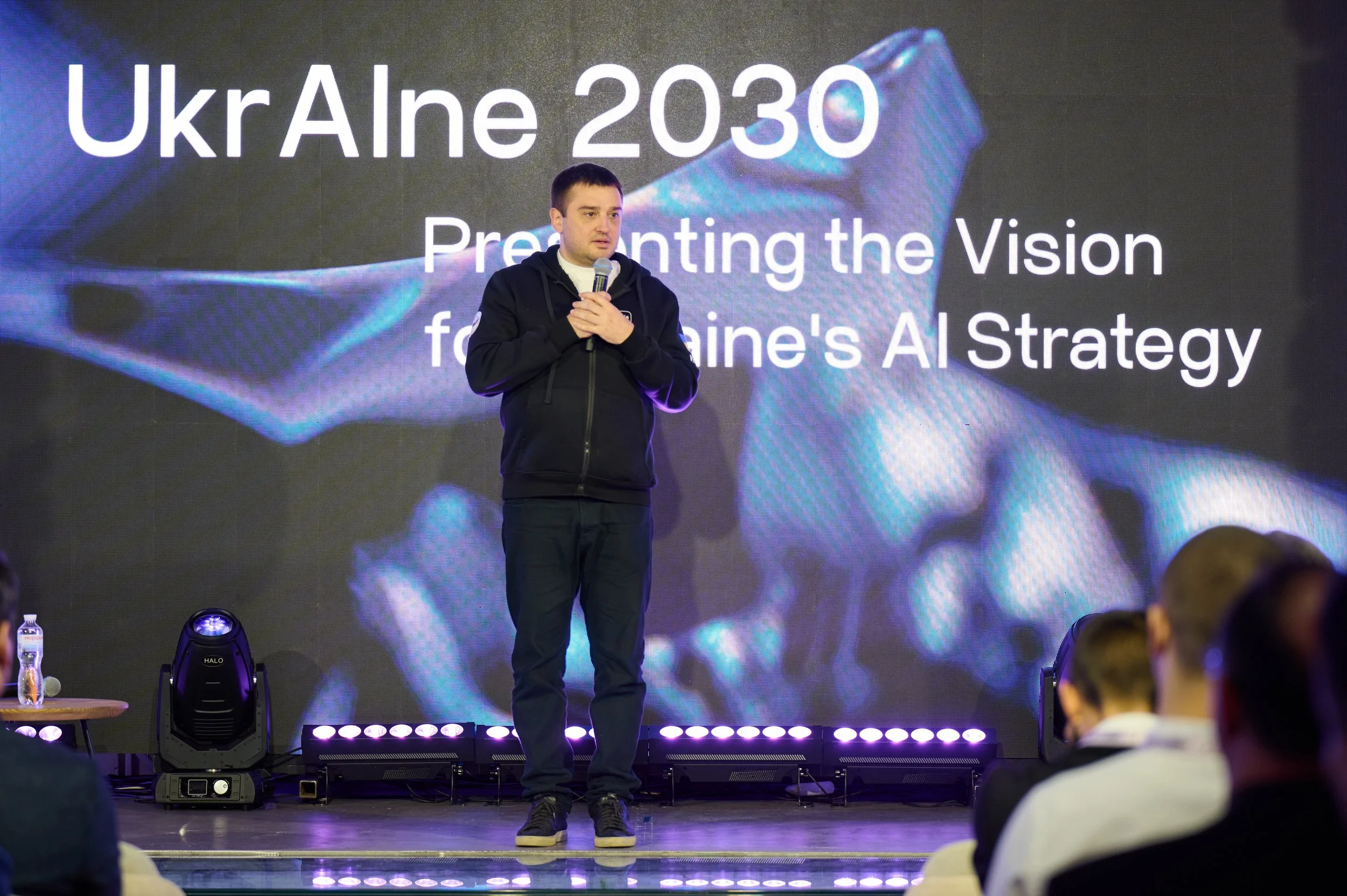

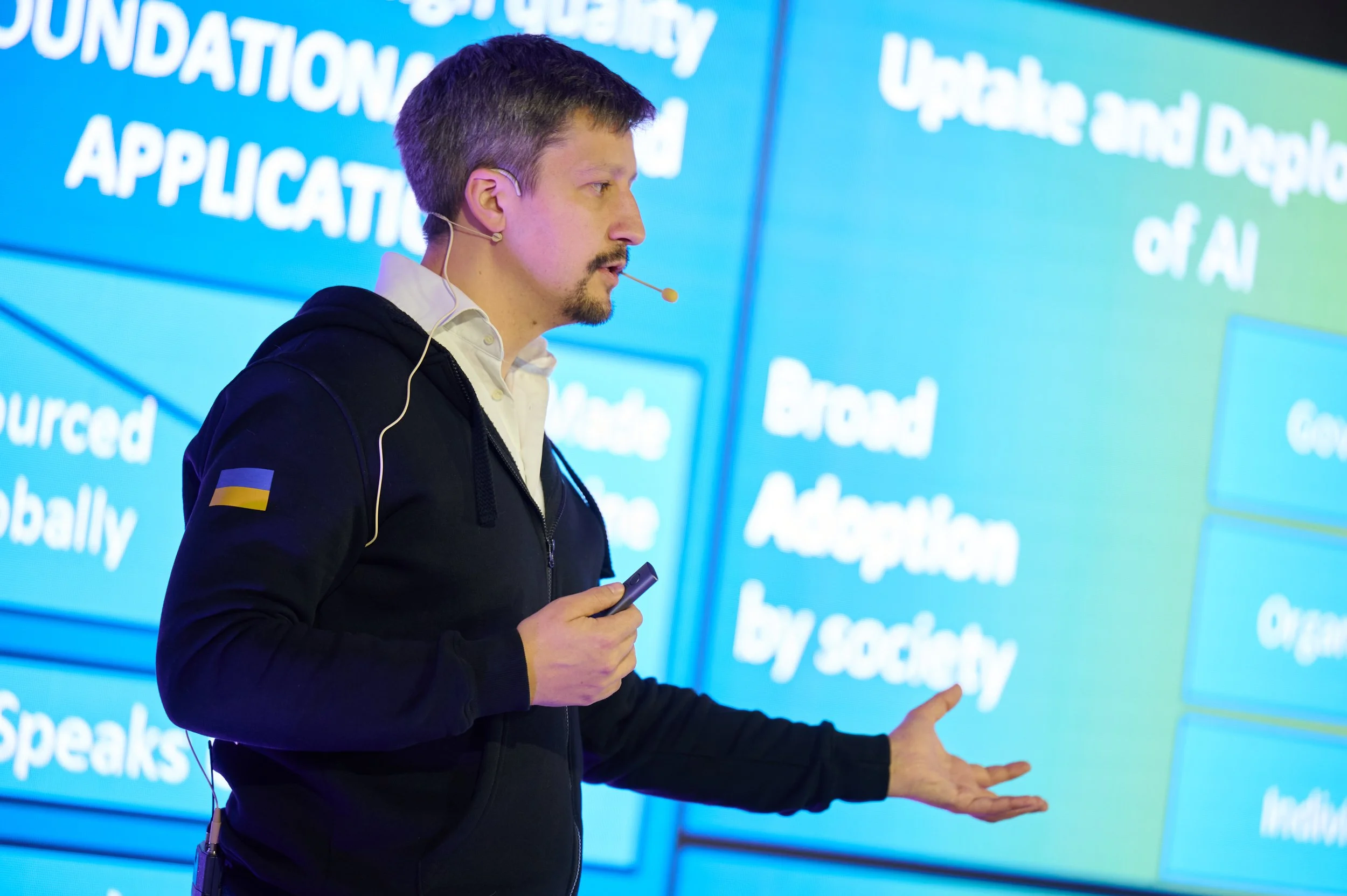
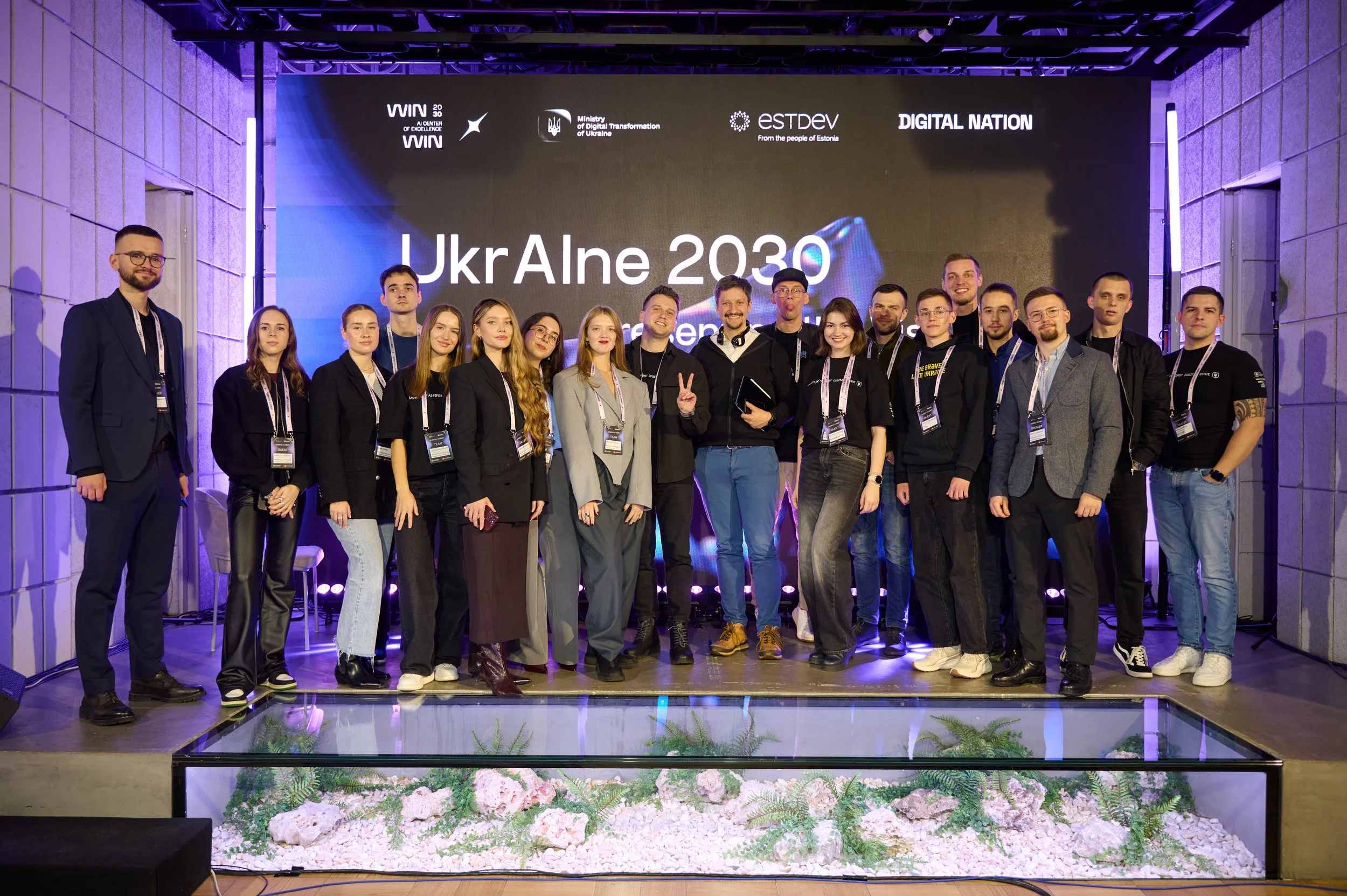

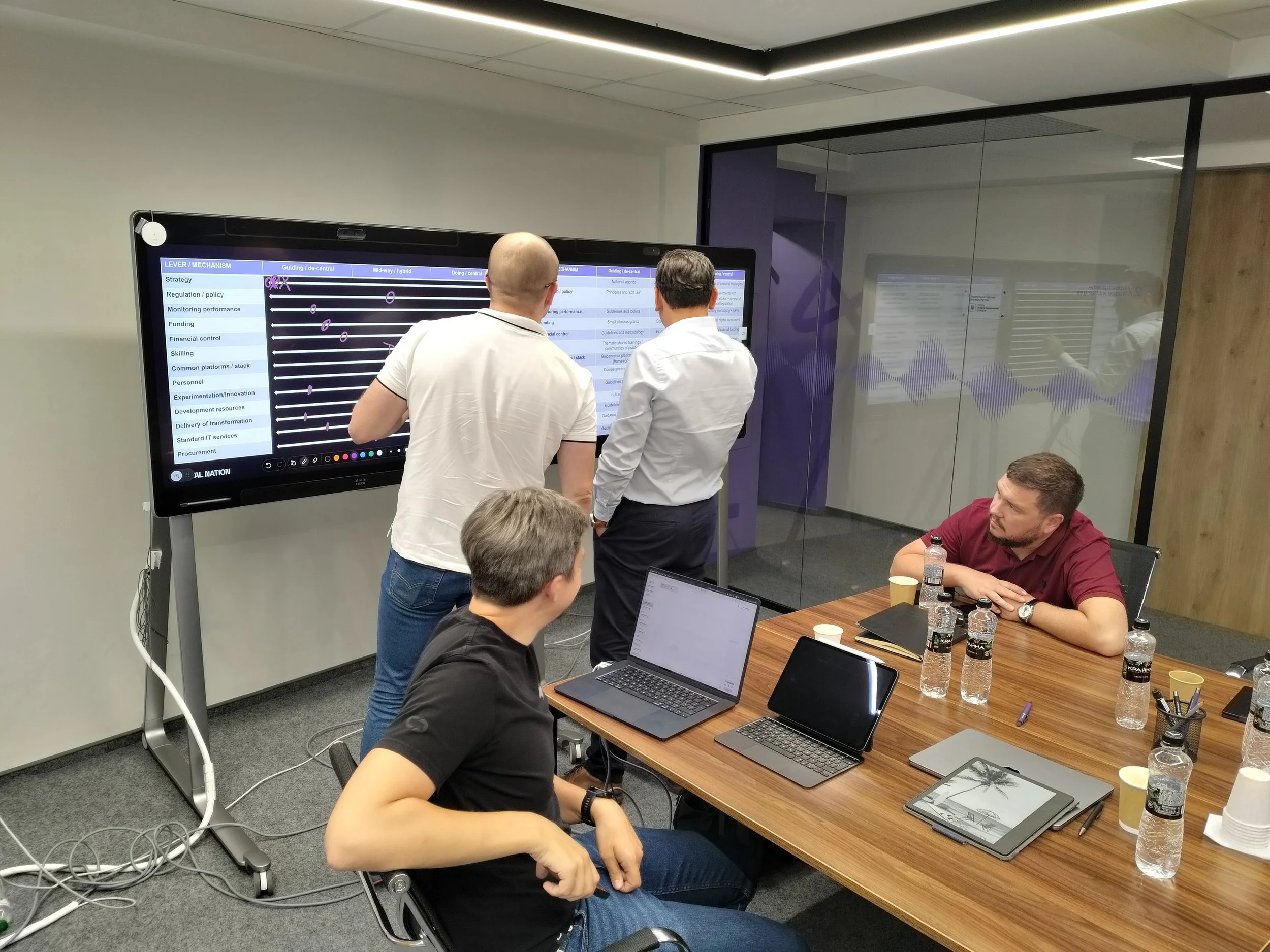
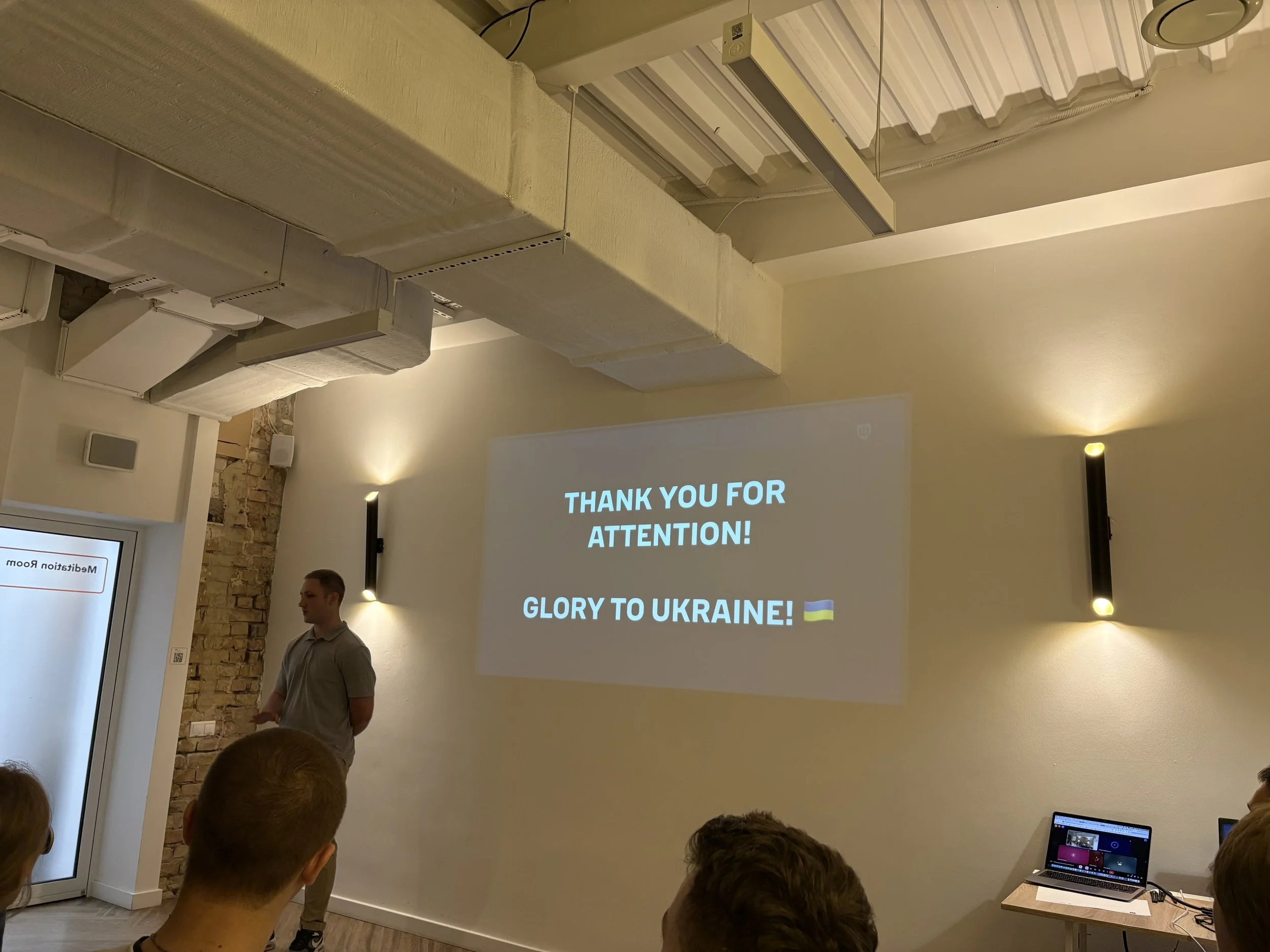
Our Approach: Key Design Choices
Considering this context, the project was built around four deliberate methodological design choices.
Adoption-first, instead of technology-first
The strategy approached AI capability building and sectoral deployment as parallel priorities rather than sequential phases. Investments in infrastructure, data foundations, skills, and governance were pursued alongside deployment priorities in defence, public administration, healthcare, energy, agriculture, and education.
The underlying premise was that adoption cannot wait for perfect readiness. Capacity had to be built while deployment was already happening. This logic is reflected throughout the operational plan, where institutional pilots such as GovCopilot and Agentic GovStack advance together with ongoing investments.
This approach also reflected the alignment of strategic ambition with Ukraine’s realistic capacity for implementation. Prioritisation, therefore, focused on sectors and ministries where deployment could generate practical impact within existing capabilities.
Sector-based design complementing horizontal policy
Rather than treating AI as a purely horizontal policy domain, the strategy is structured around vertical priority application sectors. The primary focus areas include public administration (the “agentic state”), education and science, and key economic sectors such as energy, agriculture, and healthcare. The strategy also covers defence and national security as a dedicated focus area.
The sector-based approach made it possible to connect AI policy discussions to concrete operational realities on the ground. This was particularly evident in defence, where AI-related capabilities – ranging from battlefield intelligence to autonomous systems and decision-support tools – were already becoming part of the broader transformation of security and defence systems.
The sectoral structure was complemented by cross-cutting enabling layers such as data, infrastructure, governance, and skills, ensuring that deployment priorities were linked to broader institutional capacity-building efforts.
Co-creation through iterative consultations
The whole strategy creation process was deliberately iterative rather than linear. Extensive stakeholder engagement was treated as a core element of the strategy design process. Given the need to move quickly while ensuring broad institutional buy-in, stakeholder input was gathered and used throughout to refine priorities, test assumptions, and adjust the strategy to institutional realities.The process combined targeted workshops with ministries and sector stakeholders, an open Request for Input (RFI), and continuous validation with Ukrainian stakeholders and external experts with international experience in policy and implementation.
The latter was particularly important in connecting Ukraine’s immediate priorities and EU legislation alignment with emerging global thinking and practical steps taken by other countries in their AI strategies.
This allowed the strategy to evolve alongside growing clarity on feasibility and impact, ensuring that the final result is not only conceptually sound, but also implementable in practice.
International reach and comparative learning
International benchmarking formed a core analytical component of the strategy development process. The project mapped a wide range of international AI policy approaches, examining both successful implementation models and recurring challenges in areas such as deployment, governance, infrastructure, and public-sector adoption.The objective was not to replicate existing strategies, but to identify which approaches could realistically be adapted to the Ukrainian context given the country’s institutional capacity, governance model, and immediate priorities.
Our Approach: Strategy Architecture and Delivery Model
The design principles – most notably the adoption-first, demand-led approach – subsequently translated directly into the structure of the strategy.
The strategy architecture was built around four interconnected pillars, which aimed to balance immediate application and long-term capacity building.
accelerating deployment;
enabling access to foundational technologies;
building data, infrastructure and skills;
and ensuring effective governance.
From the outset, the strategy and its operational plan were also developed in parallel. This enabled long-term strategic objectives to be linked directly with concrete delivery mechanisms, measurable indicators, and institutional responsibilities throughout the process, rather than treating implementation as a later-stage exercise.
The governance model was designed to avoid the creation of parallel structures and build on existing institutional strengths, particularly the Ministry of Digital Transformation’s central coordination role.
Execution was anchored in a priority-sector deployment model, focusing on areas where AI could generate the highest systemic impact under existing constraints. For example:
In defence, this meant accelerating capabilities related to battlefield intelligence, autonomous systems, and AI-supported decision-making, supported through initiatives such as the Defence AI Factory and dedicated testing environments.
In public administration, the focus shifted toward scaling AI adoption through existing digital infrastructure and platforms, including GovCopilot and the broader Agentic GovStack ecosystem.
Education and science, meanwhile, were positioned as long-term capability layers designed to expand national AI talent, research capacity, and institutional readiness over time.
Outcome & Impact
The result of the process was a validated draft strategy, prepared for public consultation and subsequent governmental approval. The strategy provides a structured and implementable framework for AI deployment in Ukraine. It combines clearly defined sectoral priorities with a concrete action plan and measurable indicators, supported by designated institutional responsibilities and alignment with international frameworks. This structure ensures that strategic objectives are directly linked to execution mechanisms, reducing the risk of fragmentation or non-implementation.
Most importantly, the strategy is designed to function as an operational tool – guiding decision-making, investment, and deployment across government and priority sectors – rather than remaining a static policy statement.
“Our AI strategy is a practical tool for action, not a static statement. We drive agile regulation and a bottom-up approach to shape tech rules alongside the market. Combining sovereign data infrastructure with smart regulation will allow Ukraine to deploy AI projects instantly and within the EU AI Act framework” said Roman Kyslyi, Chief AI Officer WINWIN AI Center of Excellence.
Why it all matters
The value of an AI strategy depends less on its analytical depth than on its underlying design logic. In practice, the critical question is whether the strategy creates the conditions for sustained and large-scale adoption.
Several broader lessons emerge from this process. Adoption must be explicitly designed into the strategy. Grounding the strategy in sector-specific contexts is essential for translating ambition into actionable interventions that are already ongoing at a grassroots level. Legitimacy – and ultimately implementability – emerges from co-creation, not from post-hoc consultation.
For governments operating under conditions of uncertainty, institutional pressure, or accelerated transformation, these are not marginal design considerations. They are central to whether strategy can translate into sustained execution.
AI is moving fast, and the planning, governance, and delivery mechanisms around it need to evolve just as quickly. If you're currently exploring how to move from siloed adoption to practical delivery, we'd be happy to share our experience and discuss how others are approaching the challenge!
Digital Nation's work was funded by Estonian Centre for International Development (ESTDEV). The project also received support from the Digitalisation for Growth, Integrity and Transparency Project (UK DIGIT), implemented by Eurasia Foundation and funded by UK Dev, and from the European Union, co-funded by the French Government with support from Expertise France within the EU4Innovation East project.