
Introduction
Data is the fuel powering effective governance, innovation, and AI adoption – yet many governments still struggle to use it strategically. Much of this stems from the mystification of data governance and its role in successful transformation. To address this, Digital Nation, in collaboration with Estonian Centre for International Development (ESTDEV) and GIZ, created a practical capacity-building mechanism under the Data Governance in Africa initiative, which took the form of online courses designed to raise data governance literacy across Sub-Saharan Africa.
The aim was to equip public sector practitioners with the understanding and tools to manage, share, and create value from data responsibly. By translating complex concepts into actionable lessons tailored to real-world and regionally relevant contexts, the programme set out to help participants build the readiness needed to provide better services and to leverage emerging technologies such as AI.
Scope of Work
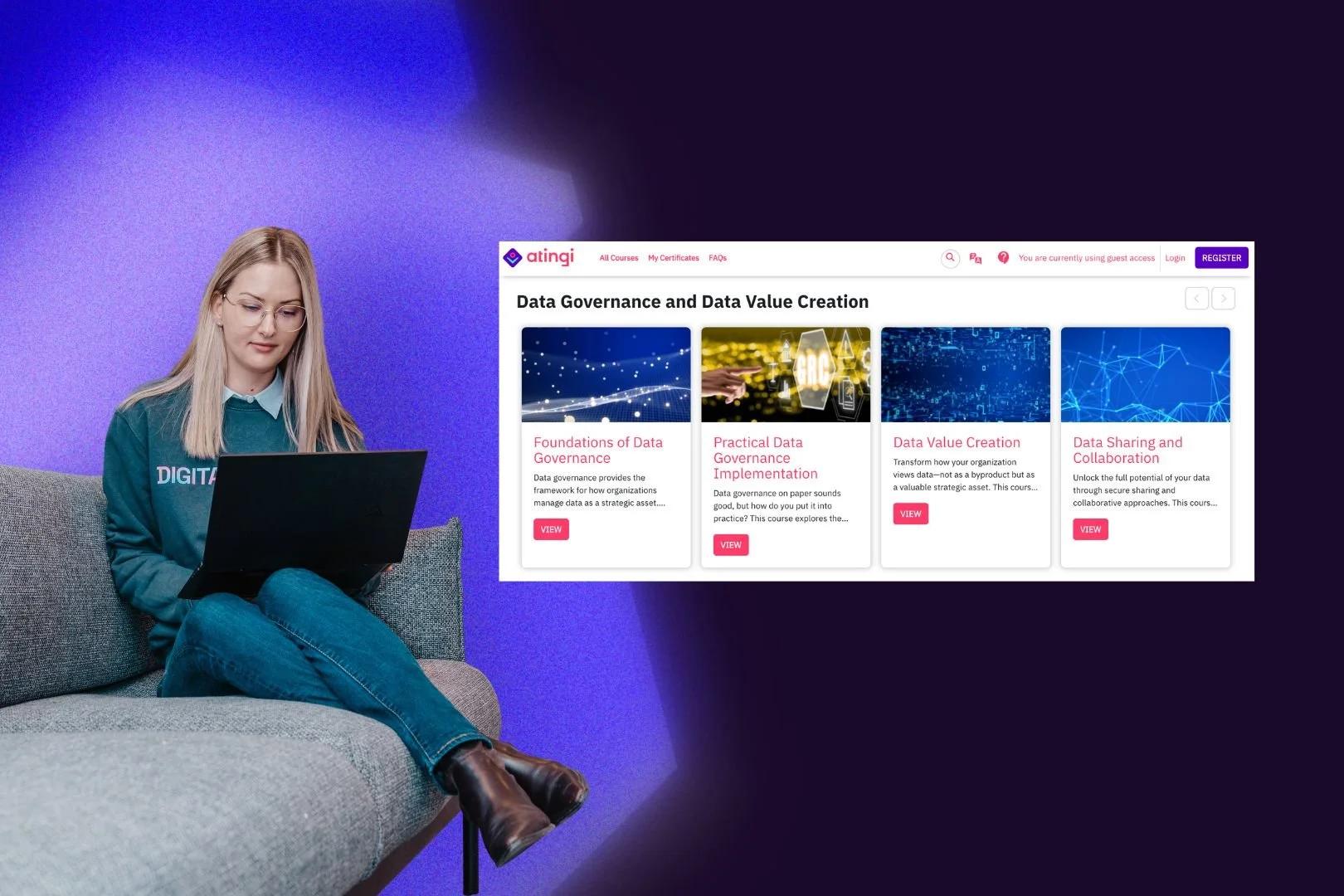
The project centred on designing and developing the complete learning journey and content for four Massive Open Online Courses (MOOCs) — available in English and French – each addressing a critical layer of data governance:
Foundations of Data Governance – the core principles, and value of data governance.
Practical Data Governance Implementation – concrete methods for applying governance frameworks, defining organizational roles, and adopting the FAIR principles (Findability, Accessibility, Interoperability, Reuse).
Data Value Creation – how to treat data as a strategic asset, manage the data lifecycle, and identify opportunities for economic, social, and political value.
Data Sharing and Collaboration – secure and ethical data exchange, stakeholder collaboration, and regulatory compliance, culminating in the application of best practices for transparent, trust-based data ecosystems.
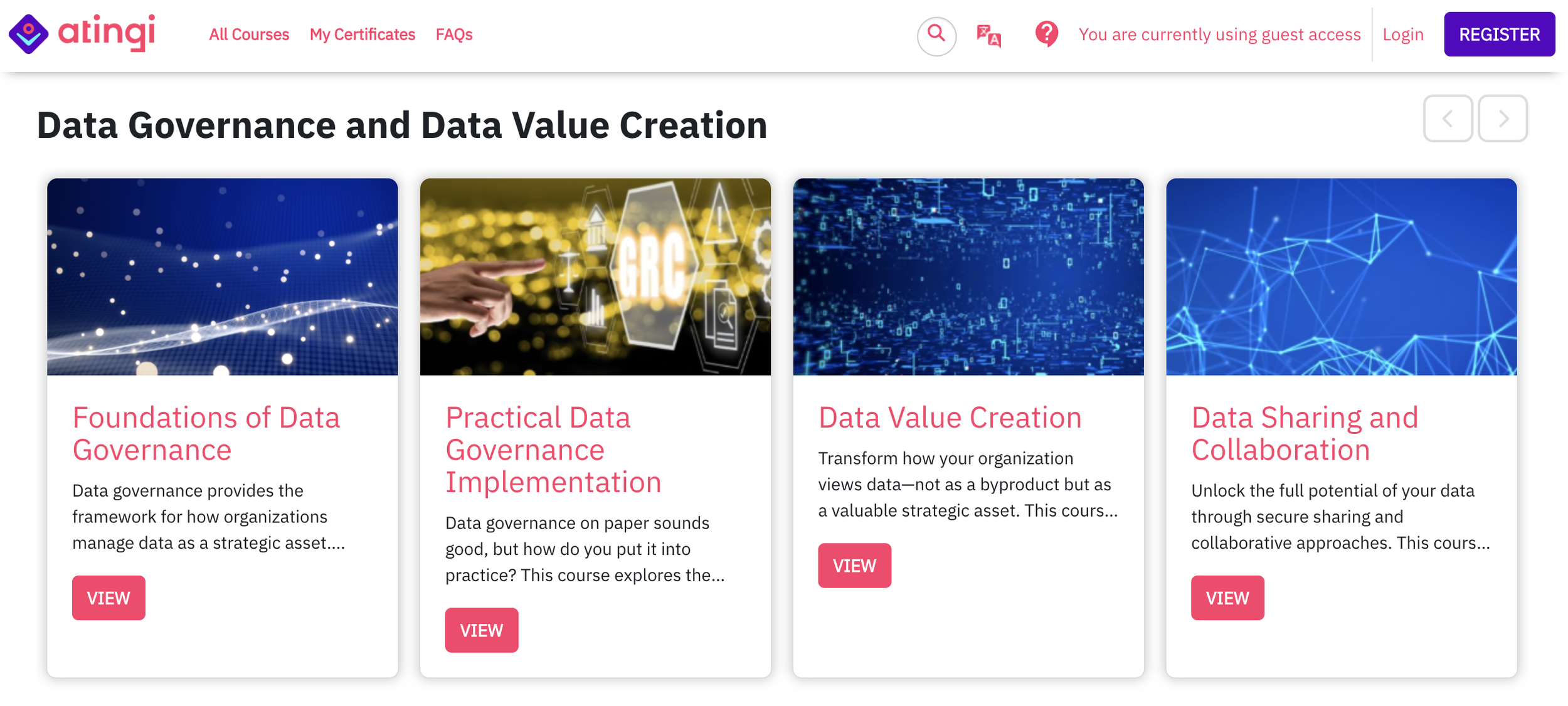
Together, these courses form a coherent learning pathway — taking participants from awareness to action, and equipping them with skills to drive data-driven transformation across their governments and institutions.
Our approach
At the heart of the project was our co-creation process, building each course hand in hand with experts, instructional designers, and representatives of the target audience – Sub-Saharan African policymakers and professionals from public institutions, civil society, academia, and international organizations. We followed an iterative and persona-driven course design process, ensuring that the learning journey was intentional and reflecting the needs of the target audience as well as local realities.
Our approach was deeply practical and interactive, keeping in mind concrete strategies for learner engagement. Every module translates theory into action through real-world examples, quizzes, and case studies. The courses were designed around the daily realities of public sector practitioners in the region, focusing on the why and the how of effective data governance.
Across the project – from the methodology to the content itself – we leveraged global expertise, combining our hands-on experience in data governance from Estonia with best practices around the world. This blend of global insight and local adaptation turned abstract concepts into actionable skills for Africa’s digital transformation leaders.
Impact
The courses – now available on the Partners page on the Atingi platform – are helping demystify data governance, turning an abstract concept into something tangible and empowering. Learners thus far have reported a clear understanding of what data governance is, why it matters, and how it applies to their daily work. Most rewarding was the feedback that local use cases made the lessons relatable, inspiring pride and confidence to drive data-driven change across their institutions.
The project “Data Governance E-learning Courses for Sub-Saharan Policymakers” was supported by:
